▼ OVERVIEW ▼
Artificial intelligence (AI) is increasingly used in medical detection to assist doctors in identifying diseases earlier and more accurately. One of the most impactful applications is AI-driven tumor detection, where machine learning models analyze medical scans—such as MRIs, CT scans, X-rays, and pathology slides—to detect cancer, assess risk levels, and guide treatment decisions.
!! IMPORTANT !! These systems are designed to support healthcare professionals, not replace them, by improving speed, consistency, and diagnostic insight.
▼ DATA USED BY AI MEDICAL DETECTION SYSTEMS ▼
AI medical detection systems rely on large and diverse datasets to learn patterns associated with disease. Common data inputs include:
DATA INPUTS
- Medical imaging: X-rays, MRIs, CT scans, radiology images
- Pathology data: Whole-slide images of tissue samples
- Patient vitals: Heart rate, glucose levels, blood pressure
- Demographic information: Age, sex, ethnicity
- Medical history: Previous diagnoses, treatments, genetic risk factors
In many cases, unlabeled images are grouped into specific regions of interest, allowing AI systems to learn visual features associated with abnormal tissue without requiring manual labeling for every image.
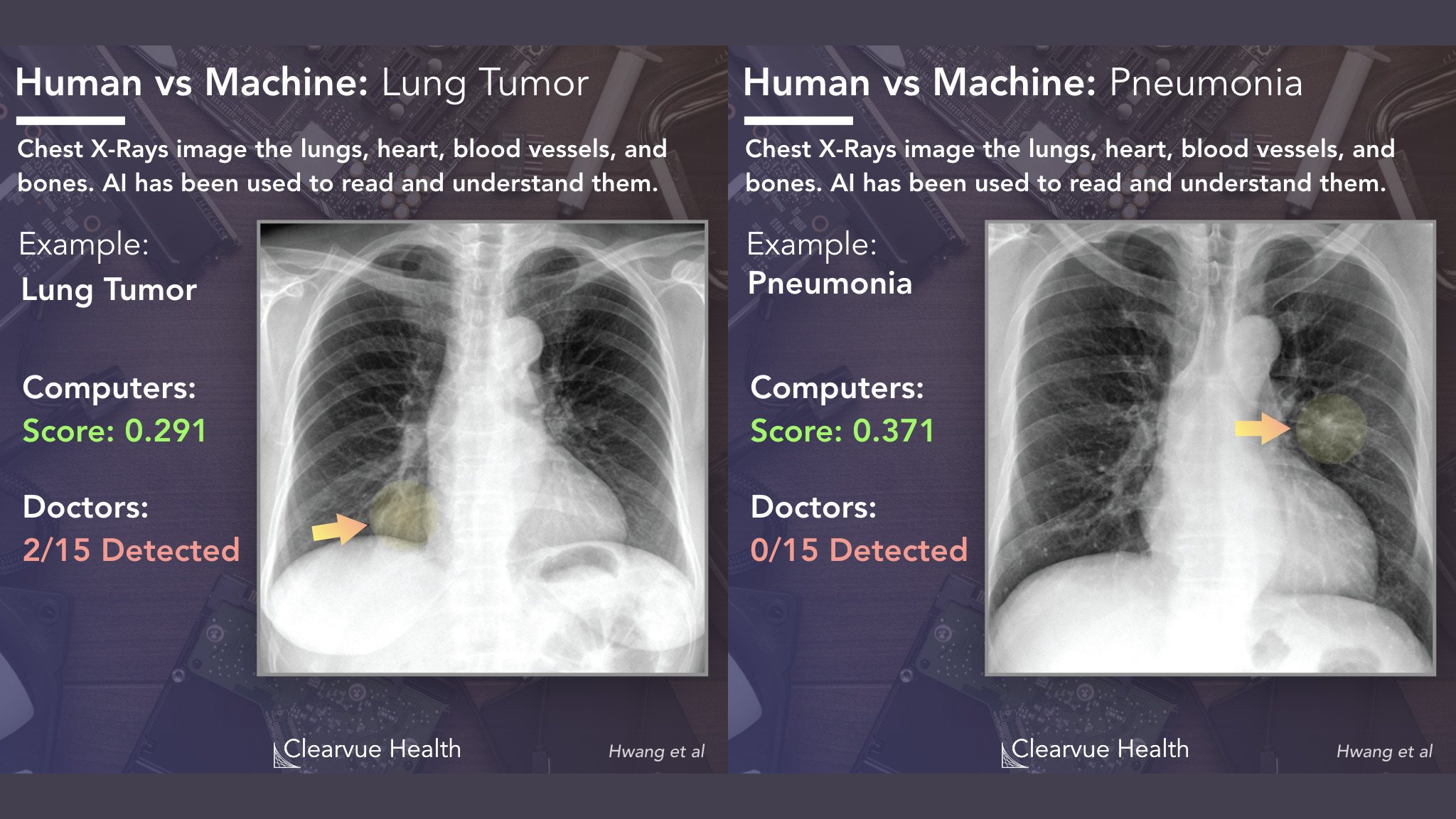
▲ AI systems analyze medical imaging to detect abnormalities and assist physicians in diagnosis ▲
▼ OUTPUTS AND PREDICTIONS ▼
After processing the data, AI systems generate several types of outputs to assist clinicians, including:
- Tumor detection results (tumor present or not)
- Risk scores estimating the likelihood or severity of disease
- Disease classification and staging
- Alerts for physicians when abnormal patterns are detected
- Recommendations for follow-up testing or treatment pathways
These outputs help doctors prioritize cases, reduce diagnostic delays, and make more informed decisions.
▼ REAL-WORLD EXAMPLES ▼
EXAMPLE 1: Harvard Science Institute AI System
Researchers at the Harvard Science Institute developed an AI tool capable of diagnosing cancer, guiding treatment decisions, and predicting patient survival. The system analyzes complex medical imaging and pathology data to identify cancer patterns that may be difficult for humans to detect consistently.
Source: Harvard Gazette (2024)
EXAMPLE 2: USC Viterbi School of Engineering AI Tool
Researchers at USC Viterbi are developing an AI system that scans blood samples to automatically detect cancer cells. This approach could allow for earlier, less invasive cancer detection compared to traditional biopsies.
Source: USC Viterbi School of Engineering
▼ PROBLEMS AND LIMITATIONS ▼
Despite its promise, AI medical detection faces several major challenges:
Data Bias and Insufficient Representation
AI systems trained on limited or non-diverse datasets may perform poorly for underrepresented populations. This can lead to unequal diagnostic accuracy across racial, ethnic, and socioeconomic groups.
Source: Oncotarget
Over-Reliance on AI
There is concern that clinicians may become overly dependent on AI systems, potentially reducing hands-on diagnostic skills and critical thinking. Over-reliance can be dangerous if AI outputs are accepted without human verification.
Source: TIME Magazine; The Lancet study
Trust and Reliability Issues
Many AI models function as "black boxes," meaning their decision-making process is difficult to interpret. This lack of transparency makes it harder for doctors to trust AI-generated diagnoses, especially in high-stakes situations.
Source: MIT Technology Review
▼ MALFUNCTIONS AND FAILURES ▼
AI medical detection systems are not immune to failure. Common malfunctions include:
!!! POTENTIAL SYSTEM FAILURES !!!
- False negatives: Where a tumor is missed, potentially delaying treatment
- False positives: Leading to unnecessary anxiety, testing, or procedures
- System errors: Caused by poor image quality or incomplete data
- Model drift: Where AI accuracy decreases over time as medical practices or patient populations change
- Technical failures: Such as software bugs or integration issues with hospital systems
These malfunctions highlight the importance of continuous monitoring, regular retraining of AI models, and maintaining human oversight in all diagnostic decisions.
▼ CONCLUSION ▼
AI medical detection has the potential to revolutionize healthcare by improving early cancer detection, supporting physicians, and personalizing treatment strategies. However, challenges such as data bias, trust, over-reliance, and system malfunctions must be addressed to ensure these technologies are used safely and equitably.
KEY TAKEAWAY
When combined with expert human judgment, AI can serve as a powerful tool to enhance—not replace—modern medicine.